One Mentor, One Student, One Future: How Kiwanis Is Closing the Academic Achievement Gap From the Inside Out
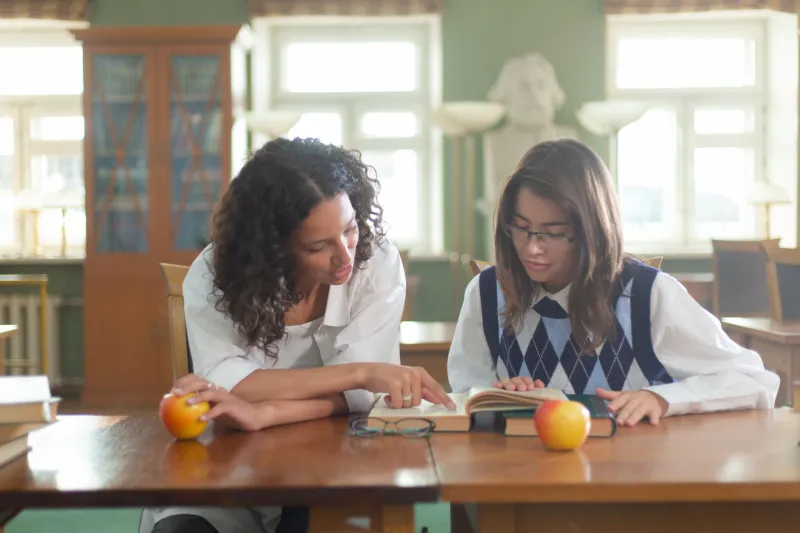
In a modest middle school library in Columbus, Ohio, a retired electrical engineer named Gerald spends every Tuesday afternoon seated across a small table from a seventh-grader named Marcus. They are not working through algebra problems. They are talking about Marcus's weekend, about the argument he had with a classmate, about whether he thinks high school is even worth attending. Gerald listens. Then, carefully, he redirects.
This is what Kiwanis mentorship looks like in practice — and it is happening in hundreds of communities across the country.
While academic tutoring programs have long occupied the center of conversations about educational equity, Kiwanis International and its network of local clubs have taken a notably different approach. Rather than focusing exclusively on subject-matter instruction, Kiwanis-affiliated mentorship initiatives are designed to address the full constellation of challenges that place students at risk of falling behind: unstable home environments, social isolation, chronic absenteeism, and a persistent absence of trusted adult figures outside the immediate family.
Why Tutoring Alone Is Not Enough
The academic achievement gap in the United States is well-documented and stubbornly persistent. According to the National Center for Education Statistics, students from low-income households continue to score significantly below their more affluent peers on standardized assessments, and the disparities widen as students advance through grade levels. Remedial instruction can help, but researchers have increasingly noted that cognitive support alone rarely moves the needle for students whose primary obstacles are non-academic.
"A child who hasn't eaten a reliable breakfast, who witnessed a violent incident in his neighborhood the night before, who doesn't believe any adult is genuinely invested in his success — that child is not going to absorb a lesson on fractions," said Dr. Annette Holloway, an educational psychologist based in Atlanta who has consulted with Kiwanis clubs on program design. "What those students need first is a relationship. Everything else builds from there."
Kiwanis clubs have structured their mentorship programs around precisely this insight. Members commit to regular, one-on-one meetings with a single student over an extended period — often an entire academic year, and frequently longer. The emphasis is on consistency and trust-building rather than curriculum delivery.
Measuring What Matters
The Kiwanis Club of Greater Nashville launched its structured mentorship initiative three years ago in partnership with Metro Nashville Public Schools, targeting students in grades five through eight who had been identified by counselors as facing multiple risk factors. The program currently serves 112 student-mentor pairs.
The results, compiled at the end of the most recent academic year, are notable. Among participating students, chronic absenteeism — defined as missing ten percent or more of school days — declined by 34 percent compared to the prior year. Grade retention rates dropped by nearly half. Perhaps most significantly, 89 percent of eighth-grade participants who completed the full program enrolled in high school without interruption, compared to a 71 percent rate among a comparable group of non-participating peers.
"We were cautious about attributing too much to the program in the early months," said Sandra Okafor, the club's youth services chair. "But when you see those numbers and you hear what the students and their families are saying, it becomes very difficult to dismiss the connection."
Similar outcomes have been reported by clubs in other regions. In Albuquerque, New Mexico, the local Kiwanis chapter partnered with two Title I elementary schools to provide mentors for students identified as reading below grade level. After one full academic year, 67 percent of participating students advanced at least one reading level, and teacher-reported engagement scores improved across the cohort.
The Mentor Experience
The program's impact is not confined to students. Member testimonials consistently describe mentorship participation as among the most personally meaningful service they have undertaken within Kiwanis.
"I've done the pancake breakfasts and the fundraising walks, and those matter," said Patricia Dunmore, a retired school administrator who mentors two students through the Kiwanis Club of Baton Rouge. "But sitting with a child week after week and watching them start to believe in themselves — that's something different entirely. That changes you."
Mentors receive structured orientation training before being matched with students, and ongoing support from club coordinators throughout the program year. Many clubs have also established peer networks among mentors, allowing members to share strategies and troubleshoot challenges in a confidential setting.
Retention among mentors is notably high. Across clubs that track the metric, the majority of mentors who complete one program year choose to continue for a second, and many have maintained relationships with former students well beyond the formal program period.
Addressing Systemic Barriers Through Personal Connection
What distinguishes Kiwanis mentorship from other volunteer-driven educational programs is the deliberate attention paid to the structural obstacles students face. Mentors are trained to identify signs of food insecurity, housing instability, and family crisis, and to connect students and families with community resources when appropriate. The mentor relationship, in this model, becomes a conduit not only for encouragement but for navigation of systems that many families find opaque or intimidating.
In Denver, the local Kiwanis club worked alongside a school district social worker to develop a resource referral protocol specifically for mentors. When a mentor identifies an unmet need — a student who lacks winter clothing, a family facing eviction, a teenager who has expressed feelings of hopelessness — there is a clear, confidential pathway for connecting that student to support.
"Our mentors are not social workers, and we don't ask them to be," said club president Raymond Estrada. "But they are often the first person a student tells when something is wrong. We want them to know exactly what to do with that information."
The Ripple Effects
The influence of these mentorship relationships frequently extends beyond the individual student. Teachers and school administrators who have partnered with Kiwanis clubs report broader shifts in school culture when mentorship programs are implemented at scale. Students who are not directly enrolled in programs sometimes experience indirect benefits, as the presence of engaged adult volunteers in school buildings can alter the social dynamics of the environment.
Parents and guardians, too, report meaningful changes. Several clubs have formalized family engagement components into their programs, hosting quarterly gatherings where mentors, students, and families can meet in an informal setting. The goal is to reinforce that the mentor relationship is a supplement to — not a substitute for — the family's own investment in the child's future.
"We want families to see us as partners, not as outsiders who have come in to fix something," said Okafor. "The relationship works best when everyone is moving in the same direction."
A Model Worth Scaling
Kiwanis International has identified mentorship as a strategic priority in its current organizational planning cycle, and the results emerging from local clubs suggest that the investment is warranted. As school districts across the country grapple with the lingering academic disruptions of the pandemic years and a persistent shortage of school counselors, community-based mentorship may represent one of the most cost-effective and scalable interventions available.
The formula, it turns out, is not complicated. One committed adult. One student who needs to be seen. One relationship, built slowly and sustained deliberately, over the course of a school year.
In Columbus, Gerald and Marcus have now been meeting for eighteen months. Marcus recently told his school counselor that he wants to study engineering. Gerald, who spent four decades in the field, is already thinking about which colleges to recommend.
That conversation — between a retired professional and a twelve-year-old who once doubted whether high school was worth the effort — is precisely what Kiwanis mentorship is designed to make possible.