Beyond the Food Drive: 7 Inventive Ways Kiwanis Clubs Are Fighting Child Hunger Where It's Hardest to Reach
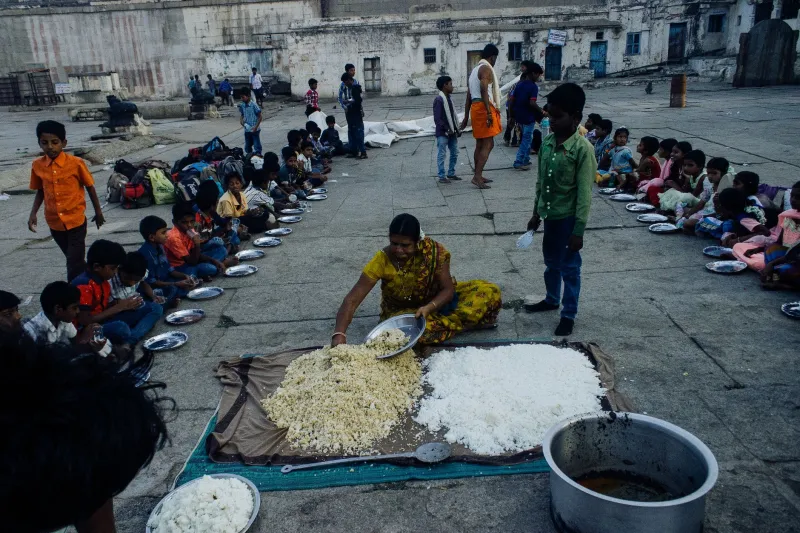
The statistics are both familiar and sobering. Millions of American children experience food insecurity each year, and the burden falls disproportionately on rural communities — places where grocery stores may be an hour's drive away, where school meal programs are the primary nutritional safety net, and where the summer months bring a particular kind of crisis when that safety net disappears.
Kiwanis clubs embedded in these communities understand the problem in ways that aggregate data cannot fully capture. They know which families are quietly struggling, which programs are actually reaching children in need, and which approaches have failed despite the best of intentions. That local knowledge has produced a remarkable range of innovative hunger-relief initiatives — programs that go far beyond the traditional food drive model and reflect a sophisticated understanding of how food insecurity actually operates in rural America.
What follows is a look at seven of the most inventive and impactful approaches currently being pursued by Kiwanis clubs across the country.
1. Mobile Pantries That Go Where Families Are
In counties where the nearest food bank may be forty miles from the families who need it most, transportation is as significant a barrier as food supply. Several Kiwanis clubs have addressed this directly by launching mobile pantry programs — essentially food distribution on wheels — that bring groceries directly into rural neighborhoods, trailer parks, and isolated communities on a regular schedule.
The Kiwanis club in a rural county in eastern Kentucky operates a converted cargo van that runs a bi-weekly route through six communities, distributing fresh produce, shelf-stable staples, and hygiene items. Club members coordinate with local schools and churches to identify families with children who are most at risk, ensuring that the route prioritizes the highest-need stops.
"We were seeing kids come to school on Monday mornings who clearly hadn't had enough to eat over the weekend," said the club's service committee chair. "The food bank was doing incredible work, but families couldn't always get there. So we brought the food bank to them."
Since launching, the program has served an average of 180 children per month and has expanded its route twice to meet demand.
2. School Garden Programs That Grow More Than Vegetables
Several Kiwanis clubs have partnered with rural school districts to establish on-campus gardens that serve multiple purposes simultaneously: they produce fresh food for school meal programs, teach children practical skills in horticulture and nutrition, and create a sense of ownership over the food that students eat.
A club in rural New Mexico funded the installation of raised garden beds at three elementary schools, provided initial planting supplies, and recruited member volunteers to lead gardening sessions during school hours. By the second growing season, the gardens were producing enough to supplement cafeteria meals with fresh vegetables twice a week.
Teachers at participating schools report that the gardens have also become an unexpected educational resource, with students tracking plant growth as part of math lessons and writing about the garden in language arts assignments. The program has since been adopted by the state's department of agriculture as a model for other rural districts.
3. Backpack Programs Redesigned for Rural Realities
Weekend backpack programs — which send children home on Fridays with a bag of food to sustain them through the weekend — are well established in urban and suburban school settings. Kiwanis clubs in rural areas have adapted this model to address the unique challenges of their communities, including the logistical complexity of reaching students who are spread across large geographic areas and may not have reliable access to public transportation.
One club in rural Georgia redesigned its backpack program to send food home on Thursdays rather than Fridays, after discovering that many of its students rode school buses that took more than an hour each way and that Friday afternoon pickups were frequently complicated by extracurricular activities and parental work schedules. This seemingly small adjustment increased program participation by 22 percent in its first semester.
4. Scholarship-for-Service Models That Address Hunger and Build Leaders
At least a handful of Kiwanis clubs have developed scholarship programs with a service component specifically tied to food security work — effectively creating a pipeline of young community advocates while simultaneously addressing immediate need.
Under these models, high school students receive modest scholarship awards in exchange for a specified number of hours working with local food programs: staffing mobile pantry routes, maintaining school gardens, or organizing food drives. The arrangement provides meaningful financial support to students who need it, while also building a cadre of young people with firsthand experience in hunger relief.
"These students become our most effective advocates," said one club leader in rural Tennessee who helped design such a program. "They understand the issue from the inside. Several of them have gone on to study nutrition, social work, or public health. The scholarship was an investment in the community's long-term capacity."
5. Summer Feeding Site Partnerships That Fill the Gap
For many rural children, the end of the school year also means the end of reliable access to meals. Federal summer feeding programs exist to address this gap, but participation in rural areas is notoriously low — in part because sites are often located in central areas that are difficult for dispersed rural families to reach, and in part because awareness of the programs is limited.
Kiwanis clubs in several states have stepped in as community partners for federally funded summer feeding sites, handling local outreach, staffing, and logistics in ways that government agencies are not equipped to manage. By hosting sites at locations families already frequent — libraries, community centers, and churches — and publicizing the programs through school networks and social media, these clubs have dramatically increased participation.
One club in rural Mississippi helped increase summer meal site enrollment in its county by 35 percent over two years by taking on the role of community connector between the federal program and the families it was designed to serve.
6. Gleaning Networks That Rescue Food From Local Farms
Rural communities have one resource that urban food deserts do not: proximity to agricultural production. Several Kiwanis clubs have capitalized on this by establishing gleaning networks — organized volunteer programs that harvest surplus produce from local farms and redirect it to food pantries, school programs, and families in need.
A club in the Central Valley of California coordinates with a rotating group of local farms to send volunteer teams during harvest season, collecting produce that would otherwise go to waste due to cosmetic imperfections or market surplus. Last year, the network recovered more than 14,000 pounds of fruits and vegetables, the majority of which was distributed to children and families through partner organizations.
Farm owners participating in the program report that the arrangement benefits them as well, reducing disposal costs and providing a sense of direct community contribution that many find meaningful.
7. Nutrition Education Workshops That Extend Every Dollar
Food access and food literacy are distinct but related problems. Even when families have access to food assistance, limited knowledge of nutrition, meal planning, and food preparation can undermine the benefit. Several Kiwanis clubs have addressed this by partnering with local extension services, dietitians, and culinary educators to offer free nutrition workshops specifically designed for families with children.
These workshops go beyond generic healthy eating advice to address the practical realities of cooking on a limited budget, using shelf-stable and donated foods creatively, and preparing quick, nutritious meals that children will actually eat. Participants report that the workshops help them stretch food assistance further and feel more confident in their ability to feed their families well.
One club in rural Appalachia has integrated its nutrition workshop program with its food pantry operations, offering a short workshop to families who visit the pantry each month. Attendance is voluntary, but consistent — a sign, organizers say, that families value the knowledge as much as the food itself.
What unites these seven initiatives is not a single strategy or program model, but a shared orientation: a willingness to look at hunger as it actually exists in a specific community and design a response that fits. Kiwanis clubs have always operated at the local level, and it is that proximity — to the families, the schools, the farms, and the institutions of rural America — that makes this kind of adaptive, inventive service possible.
The food drive will always have a place in the Kiwanis toolkit. But the clubs profiled here are demonstrating that the most effective hunger relief is rarely the most obvious kind.