When the Storm Passes, the Club Gets to Work: Inside the Kiwanis Disaster Response Playbook
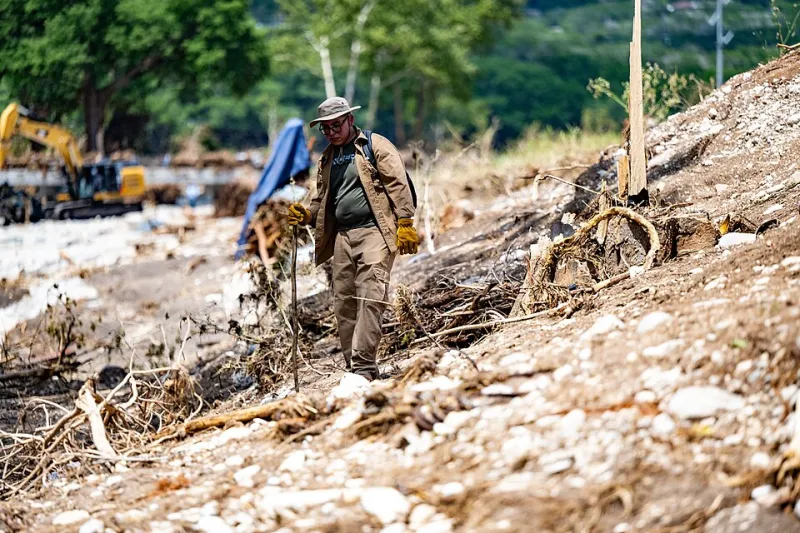
Photo: U.S. Air Force photo by Zelideth Rodriguez, Public domain, via Wikimedia Commons
Disasters do not wait for a national organization to arrive. They hit a specific town, a specific school, a specific row of houses. That is why Kiwanis clubs are often part of the earliest local response, even when they are not the first agency with a radio and a flashing light.
The role is not glamorous. Kiwanis members are not usually trained rescue swimmers or structural engineers. But they know the roads, the churches, the school principals, and the families who might not show up on an official list. In the first hours after a hurricane, wildfire, or flood, that local knowledge can be as valuable as a supply truck.
The Advantage of Being Local
National disaster response is built on coordination. Local Kiwanis clubs sit at the intersection of formal and informal networks. A club member may be a retired teacher who knows which families have elderly relatives at home. Another may run a hardware store that can source generators. A third may serve on a county board or volunteer fire department. When emergency management officials need a trusted local partner to distribute information or organize volunteers, a Kiwanis club can often move faster than a group from out of town.
That does not mean clubs should improvise on their own. The most effective clubs prepare before a disaster, building relationships with county emergency management, local faith groups, and state and national voluntary organizations active in disaster. They understand that good intentions can clog a response if volunteers self-deploy without a task or a place to stay.
Before the First Call
The Kiwanis disaster response playbook begins long before a storm has a name. Clubs that take preparedness seriously keep a current contact list for members, identify a point person for disaster coordination, and set aside modest funds that can be released quickly. Some send members to free training offered by emergency management or voluntary organizations. Others sign memoranda of understanding with local schools or community centers to use as staging areas.
The simplest preparation is a conversation. Clubs can ask their county emergency manager a few direct questions: What gaps do you expect? Where do you want volunteers? What should we not do? The answers shape a plan that is useful rather than disruptive. This is also the time to decide how the club will communicate if phone service fails. A group text chain, a printed roster, and a designated phone tree are low-tech tools that still work.
The First 72 Hours
In the first hours, the club's job is usually to account for its own members and then connect with official channels. A quick check-in can identify members who need help, and it can also reveal who has a truck, a generator, or a free afternoon. From there, the club can take on tasks that fit its capacity: staffing a donation drop-off, preparing meals at a shelter, delivering supplies to isolated neighborhoods, or helping residents fill out assistance forms.
Cash is often the most useful donation in the early days. Relief organizations can buy exactly what is needed, closer to the disaster site, without the cost of sorting and shipping donated goods. Clubs that run fundraisers can designate proceeds for local recovery and communicate clearly about how the money will be used. They can also protect volunteers by insisting on safety briefings, proper equipment, and rest periods. Disaster work is physically and emotionally taxing; a tired volunteer can become another person who needs help.
The Handoff That Matters
The transition from response to recovery is where many communities lose momentum. The news trucks leave, but the paperwork, insurance claims, and rebuilding decisions remain. Kiwanis clubs can help bridge that gap by joining long-term recovery groups, supporting case management, or adopting a specific project such as repairing a community center or replacing playground equipment.
This is also where the club's relationships matter most. A school that hosted a shelter may need help replenishing supplies. A family that lost a home may need a reliable contact who can explain the next step. Clubs should be careful not to promise more than they can deliver. A clear, modest commitment—say, funding a tool trailer or organizing weekend cleanup crews for a defined period—is more useful than vague assurances.
Recovery Is a Marathon
Long-term recovery can take years, and clubs need to plan for their own endurance. Members may experience fatigue, especially if they were personally affected. Rotating responsibilities, documenting decisions, and bringing in new volunteers can keep a project alive. Youth-led Kiwanis programs can also play a role, from supply drives to note-writing campaigns for displaced families, provided the work is age-appropriate and well supervised.
Lessons for Other Communities
The core lesson is that disaster response is not a separate skill set reserved for specialists. It is an extension of the relationships a club builds every other day of the year. Clubs that know their emergency manager, train a few volunteers, and keep a small reserve are better positioned to help when the clock starts. They also know when to step back and let professional responders lead.
When the storm passes, the club gets to work. That work is rarely dramatic. It looks like a folding table, a clipboard, a carload of water, and a member who knows exactly which street floods first. In a disaster, that local knowledge is not a small thing. It is often the beginning of recovery.