More Than Membership: Why Service Organizations Are America's Most Underrated Tool Against the Loneliness Epidemic
In May 2023, United States Surgeon General Dr. Vivek Murthy released an advisory that reframed a quiet suffering as a national emergency. Loneliness, he wrote, affects approximately half of American adults, carrying health consequences comparable to smoking 15 cigarettes per day. Social isolation increases the risk of heart disease by 29 percent, stroke by 32 percent, and dementia by 50 percent. It is, by any reasonable measure, a crisis of the first order.
The public conversation that followed focused, predictably, on familiar culprits: smartphones, social media, remote work, urban anonymity, the erosion of third places. The proposed remedies tended toward the structural — urban design reforms, workplace policy changes, expanded mental health services. These are legitimate and necessary conversations. But they risk overlooking something that already exists, already functions, and already demonstrates, week after week in communities across the country, precisely the kind of meaningful human connection that researchers identify as the antidote to isolation.
Organizations like Kiwanis International are not a new idea. They are, in fact, one of America's oldest civic technologies. And the evidence increasingly suggests that their model of service-centered community may be exactly what this moment requires.
The Anatomy of Belonging
To understand why service organizations are particularly effective at combating loneliness, it helps to understand what loneliness actually is — and what it is not. Loneliness is not the same as being alone. Many people who live in dense urban environments, surrounded by acquaintances and colleagues, experience profound social isolation. Conversely, individuals with relatively small social networks can feel deeply connected and supported.
What distinguishes genuine belonging from mere proximity, researchers have found, is a sense of shared purpose and mutual investment. People feel connected not simply when they are around others, but when they are engaged in something meaningful alongside others — when their presence is noticed, their contribution valued, and their absence felt.
This is precisely the structure that Kiwanis chapters, at their best, provide. Members do not simply gather for social recreation, though that element is present and valuable. They gather to accomplish something: to run a pancake breakfast that funds a scholarship, to organize a toy drive for families in need, to mentor a young person navigating a difficult transition. The shared project creates the shared identity. The shared identity creates the belonging.
"There's a reason why people who join Kiwanis tend to stay," observed a longtime member and social work professional based in the Midwest. "It's not the meetings. It's the feeling that what you're doing matters, and that the people next to you know it matters too."
What the Research Tells Us
The psychological literature on social connection has become considerably more sophisticated in recent years, and several of its findings are directly relevant to understanding why service organizations work as community-building mechanisms.
First, research consistently demonstrates that prosocial behavior — acts performed for the benefit of others — generates significant psychological rewards for the actor. Volunteering is associated with reduced rates of depression, lower cortisol levels, and greater reported life satisfaction. The causal relationship runs in both directions: people who feel connected are more likely to volunteer, and people who volunteer feel more connected.
Second, studies of social network formation indicate that relationships forged through shared activity are more durable and more satisfying than those formed through shared identity alone. In other words, doing something together creates stronger bonds than simply being similar to one another. This has obvious implications for the design of community organizations: structured, activity-centered groups outperform purely social or identity-based ones in generating lasting connection.
Third — and perhaps most relevant to the current moment — research on loneliness interventions suggests that the most effective programs are those that provide both a reason to show up and a role to play once there. Passive social opportunities, such as open community events or general-purpose social clubs, tend to produce weaker attachment than those in which participants have defined responsibilities and tangible contributions to make.
The Kiwanis model checks all three boxes. It provides prosocial purpose, activity-centered relationship formation, and defined roles within a structured community. It is, in the language of contemporary social science, an evidence-aligned intervention — even if it predates the evidence by a century.
The Quiet Epidemic Within the Epidemic
It is worth pausing to acknowledge the particular populations most vulnerable to loneliness in contemporary America, because they are not uniformly distributed across age or demographic groups.
Contrary to popular assumption, loneliness is not primarily a problem of the elderly. While older adults certainly face significant isolation risks — particularly following retirement, bereavement, or mobility loss — surveys consistently show that young adults aged 18 to 25 report among the highest rates of loneliness of any age cohort. This is a generation with unprecedented digital connectivity and historically low rates of civic participation, religious affiliation, and institutional membership.
It is also worth noting the particular toll of loneliness on men, who are less likely than women to maintain close friendships into adulthood and who face cultural norms that discourage the expression of vulnerability or the active cultivation of social support. Service organizations — which provide a socially sanctioned, activity-centered context for male bonding — have historically served an underappreciated function in this regard.
Kiwanis clubs, with their diverse membership spanning age, profession, and background, are unusually well-positioned to address loneliness across multiple demographic vectors simultaneously. A retired educator, a young entrepreneur, and a mid-career nurse sitting on the same committee planning a community health fair are unlikely companions in any other context. Within the Kiwanis structure, they are colleagues with a shared stake in a shared outcome.
The Limits of Digital Connection
Any honest accounting of the loneliness epidemic must grapple with the role of digital technology — not as the sole villain in this story, but as a factor that has fundamentally altered the landscape of human sociality. Social media platforms offer the appearance of connection while frequently delivering something considerably thinner: passive consumption of curated content, asymmetric relationships between creators and audiences, and the affirmation of identity without the friction of genuine engagement.
This is not to argue that digital tools are without value in building community. Kiwanis clubs themselves use digital platforms to coordinate volunteers, communicate with members, and reach prospective participants. The issue is not the technology but the substitution — the degree to which digital interaction displaces, rather than supplements, the embodied, in-person engagement that human beings are wired to require.
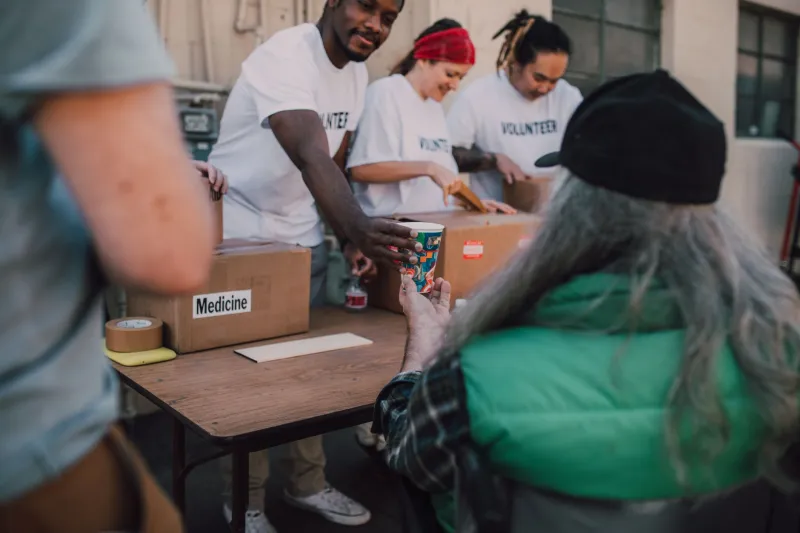
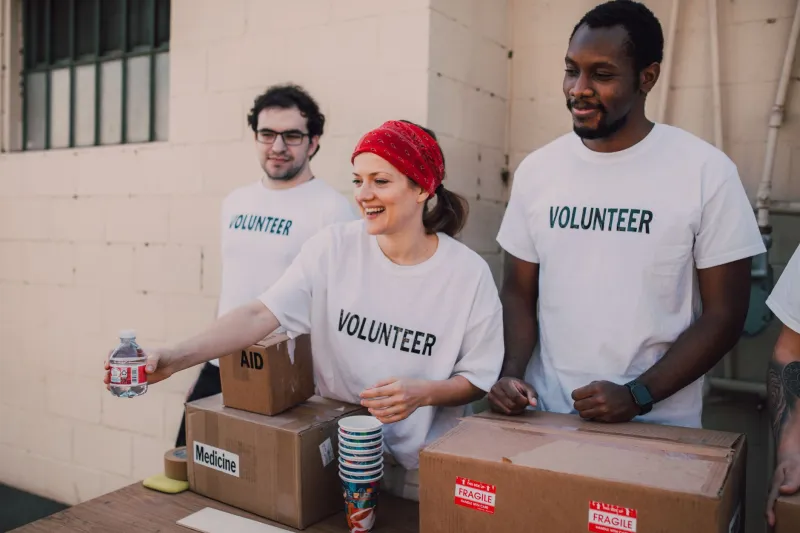
Service organizations offer something that no algorithm can replicate: the experience of being physically present with other people in pursuit of a common good. The eye contact across a folding table at a food distribution event. The shared laughter when the fundraiser raffle goes unexpectedly sideways. The quiet satisfaction of loading the last box into a donation truck alongside someone you barely knew six months ago and now count as a genuine friend.
These are not small things. They are, in fact, the things that make a life feel inhabited rather than merely observed.
A Century-Old Answer to a Modern Problem
Kiwanis International was founded in 1915, in a Detroit experiencing rapid industrialization and the social dislocations that accompany it. Its founders were responding, in part, to the same forces that confront us today: urbanization, anonymity, the weakening of traditional community bonds. The organization they built — rooted in service, structured around local chapters, oriented toward the common good — has proven remarkably durable.
That durability is not accidental. It reflects something true about human nature: that people flourish when they belong to something larger than themselves, when their actions have consequences beyond their own comfort, and when they are known and valued by others who share their commitments.
The loneliness epidemic is real, and it demands a multifaceted response. Policy reform, urban design, mental health infrastructure — all of these have a role to play. But so does the quiet, consistent, unglamorous work of people who show up every week to serve their neighbors and, in doing so, discover that they are no longer alone.
America has that resource. It has had it for more than a hundred years. The question is whether, in this particular moment of crisis, we are wise enough to recognize it for what it is.