The Quiet Lobby: How Kiwanis Members Are Moving Children's Legislation in Statehouses Across America
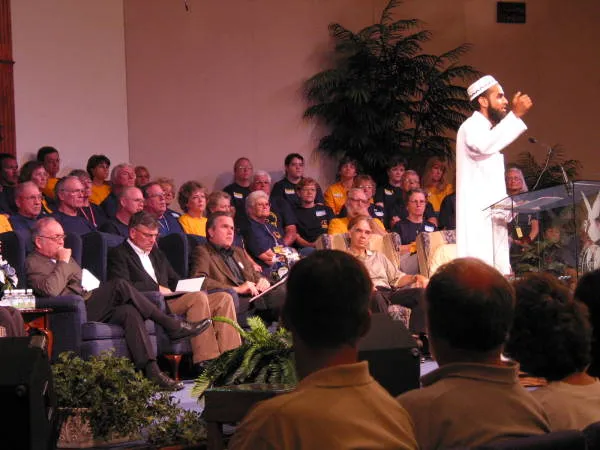
Photo: Bujak, David, Public domain, via Wikimedia Commons
In the marble corridors of state capitols, lobbyists in expensive suits crowd the hallways during legislative sessions. Yet some of the most effective advocates for children's issues in statehouses across the country wear no badges and carry no corporate contracts. They are Kiwanians — service club members who have spent decades stocking food pantries, reading to kindergartners, and installing playground equipment, and who have discovered that this quiet accumulation of community trust translates remarkably well into legislative influence.
Credibility You Can't Buy
Political scientists have a term for what Kiwanis members possess: social capital. It is the currency of trust built over years of showing up — at school board meetings, at food distributions, at scholarship ceremonies — and it is the one asset money cannot purchase in a legislative session.
Consider the experience of members in the Midwest who spent three years advocating for an update to state child passenger safety laws. Their club had run car seat inspection stations for over a decade, giving them something no paid lobbyist could claim: firsthand, documented knowledge of how many families were driving around with improperly installed seats, and why.
"When we testified, we weren't citing abstract statistics," one longtime member recalls. "We could tell lawmakers that our inspection station had checked 400 seats last year alone, and that 85 percent were used incorrectly. That's not a talking point. That's our Saturday mornings."
The bill passed with overwhelming bipartisan support.
From Service Projects to Policy Platforms
This pattern repeats itself across the country. In the Pacific Northwest, Kiwanians became early and persistent champions of statewide early literacy legislation, drawing on years of running book-distribution programs that had reached tens of thousands of young children. In the Southeast, members of several clubs in the same district coordinated their testimony in support of expanded school breakfast funding, armed with the practical knowledge of what food insecurity actually looks like in their towns.
What makes these efforts distinctive is their patience. Unlike advocacy organizations that mobilize around a single bill and then move on, Kiwanis clubs are permanent fixtures in their communities. Legislators know that the person asking them to support a literacy initiative will still be there next year — and the year after — long after the bill has been signed or forgotten.
"There's a saying around the capitol that the most persistent advocate wins," notes one state representative who has worked with local club members on children's legislation. "Kiwanians are nothing if not persistent. And because they're volunteers, their motives are never in question. When they ask for my vote, I know exactly who they're representing: the kids in my district."
A Century-Old Playbook, Updated
Kiwanis International's formal advocacy infrastructure has grown considerably in recent years, with member training programs that teach the difference between educating legislators and lobbying them, and guidance on the rules that govern volunteer advocacy for nonprofit organizations. Clubs are encouraged to build relationships with their representatives before they need them — attending town halls, inviting lawmakers to service projects, and positioning themselves as a reliable source of information about children's needs.
The results speak for themselves. Child safety seat upgrades, dyslexia screening requirements, summer meal program expansions, and school nurse funding have all advanced in various states with Kiwanis members playing visible supporting roles. None of these victories belonged to Kiwanis alone, and the members are quick to say so. But in coalition after coalition, the club's signature combination of local evidence and moral clarity has proven difficult for lawmakers to ignore.
The Lesson for Civic America
There is a broader lesson here for anyone worried about the health of American self-governance. At a moment when trust in national institutions hovers near historic lows, the institutions people still believe in are overwhelmingly local: the library board, the volunteer fire department, the service club. Kiwanis members who walk the halls of their state capitols carry that local trust with them like a passport.
The transformation from clubhouse to capitol does not require a change in mission — only a recognition that sometimes the most effective service project is a law. A pancake breakfast feeds children for a day. A statute properly funded and enforced can feed them for a generation.
For the Kiwanians who have made this leap, the motivation remains refreshingly simple. As one member-advocate put it after watching her bill signed into law: "I didn't come here to be a politician. I came here because I've read to enough kids to know which ones show up hungry. Somebody had to say it out loud."
In statehouses from coast to coast, somebody is — quietly, persistently, and one testimony at a time.